
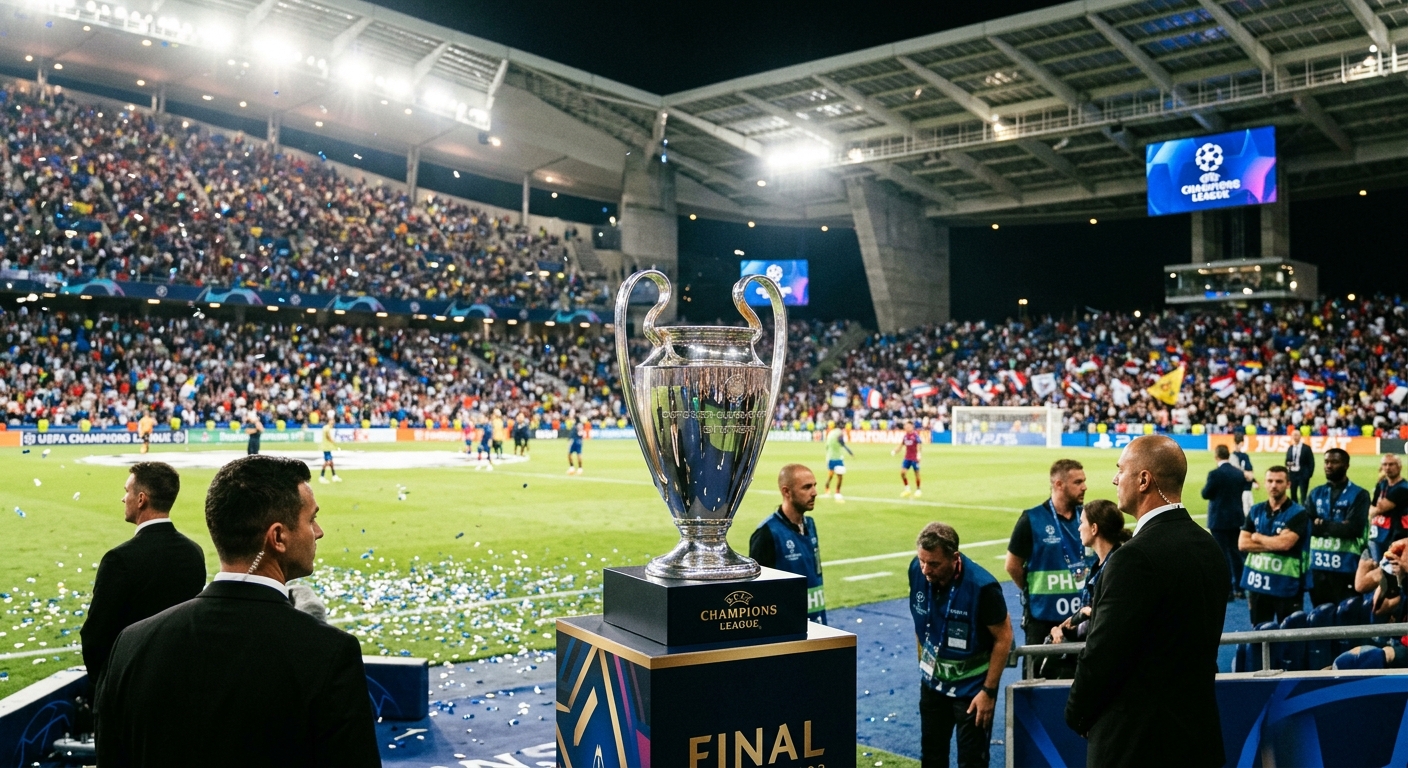
he UEFA Champions League is an annual club association football competition organised by UEFA and contested by top-division European clubs. It is the most prestigious club competition in European football and one of the most prestigious football tournaments in the world. Every season, the strongest sides from leagues across Europe compete for the trophy, and the competition attracts a massive global audience. For anyone unfamiliar with the competition, this guide explains what the Champions League is, how it works and why it matters.
The competition is the most-watched club competition in the world and the third most-watched football competition overall, after the FIFA World Cup and the UEFA European Championship. That popularity reflects the quality of the teams involved and the scale of the occasion when Europe’s biggest clubs meet.
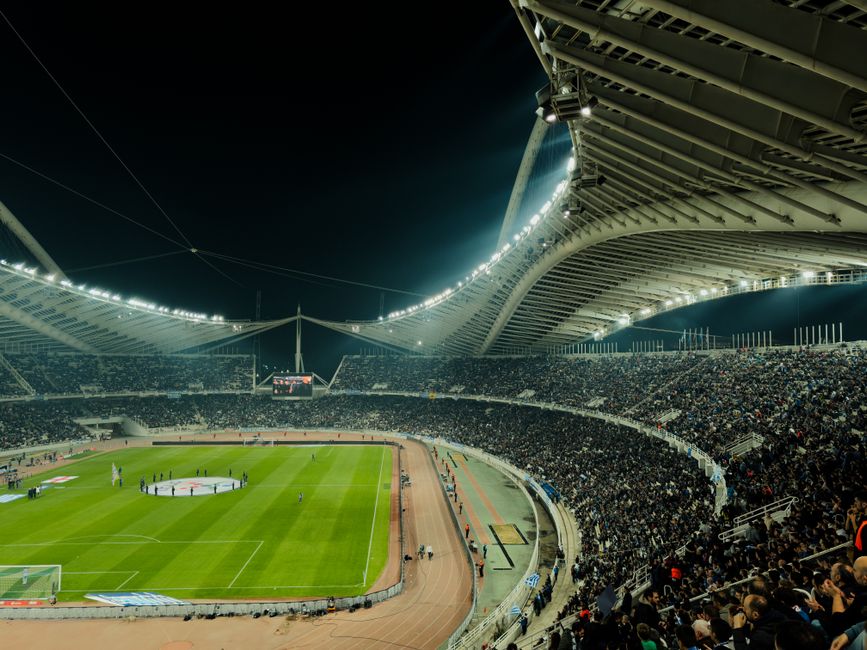
What is the Champions League?
The Champions League is the top tier of European club football, organised by UEFA and open to the best clubs from domestic leagues across the continent. It sits above the UEFA Europa League and the UEFA Conference League in the structure of UEFA competitions, and it is widely considered the highest level of club competition in the sport.
Because it brings together top-division clubs from across Europe, the standard of football is consistently high. The competition also draws enormous audiences, with supporters from across the world following the action from the early rounds through to the final.
A brief history of the competition
The competition was founded in 1955 as the European Champion Clubs’ Cup, commonly known as the European Cup. It was rebranded as the Champions League in 1992, a change that signalled the competition’s growing role as the premier stage for club football in Europe.
Since then, the competition has continued to develop, and the current format includes a league phase of 36 teams, with 81 total teams in the competition. That makes the modern Champions League a much bigger event than the original European Cup, and the format has been adjusted over the years to reflect the changing shape of the European game.
How the Champions League format works
The current format begins with a league phase featuring 36 clubs. In this stage, each of the 36 teams plays eight opponents, with four matches at home and four away. The variety of opponents gives clubs a demanding and unpredictable set of fixtures in the opening part of the season.
Once the league phase is complete, the 24 highest-ranked teams proceed to the knockout phase. The knockout stage builds towards a single final, which takes place in late May or early June. The teams that finish outside the top 24 are eliminated at the end of the league phase.
European club competitions explained
The Champions League is the top tier of UEFA’s club competitions. Below it sits the UEFA Europa League, which is the second tier, and the UEFA Conference League, which is the third tier. Clubs that finish below the Champions League qualifying spots in their domestic leagues are eligible for the Europa League, and since 2021, for the Conference League.
This three-tier system gives clubs across Europe different routes into continental competition and ensures that the Champions League is reserved for the strongest sides on the continent.
Records and the most successful clubs
Real Madrid is the most successful club in the competition’s history, with 15 titles. Paris Saint-Germain are the current champions, having won their second title. The dominance of Spanish clubs is clear from the overall record, with Spain leading the way on 20 victories in the competition’s history.
England follows with 15 wins, Italy with 12, Germany with 8, the Netherlands with 6, Portugal with 4 and France with 3. That spread of winners shows how competitive the competition has been across different eras.
| Country | Champions League titles |
|---|---|
| Spain | 20 |
| England | 15 |
| Italy | 12 |
| Germany | 8 |
| Netherlands | 6 |
| Portugal | 4 |
| France | 3 |
What does the winner get?
Lifting the trophy is the biggest prize in European club football, but the benefits extend beyond the silverware. The winner of the Champions League automatically qualifies for the following year’s Champions League, the UEFA Super Cup, the FIFA Intercontinental Cup and the FIFA Club World Cup. That means the European champions secure their place in the next season’s competition and earn entries into several additional tournaments.
The 2026/2027 season
The 2026/2027 UEFA Champions League is the current season. The league phase draw took place in Monaco on 27 August 2026, setting up the fixtures for the opening stage. The official UEFA Champions League website offers news, stats, video and Fantasy and Predictor games throughout the campaign, while the competition’s official X account, which has approximately 53 million followers, shares updates on the action.
Frequently Asked Questions
How many teams take part in the Champions League?
The competition features 81 total teams, with 36 of those clubs contesting the league phase. In that opening stage, each of the 36 teams plays eight opponents, four at home and four away. The 24 highest-ranked teams from the league phase then move on to the knockout phase.
Which club has won the Champions League the most times?
Real Madrid holds the record with 15 titles, making them the most successful club in the competition’s history. The current champions are Paris Saint-Germain, who have won the trophy twice. Spain is the most successful country, with Spanish clubs recording 20 victories in total.
What is the difference between the Champions League, Europa League and Conference League?
The Champions League is the top tier of UEFA club competition, the Europa League is the second tier and the Conference League is the third tier. Clubs that finish below the Champions League qualification places in their domestic leagues are eligible for the Europa League and, since 2021, for the Conference League.
When is the Champions League final played?
The final is played in late May or early June, capping off the knockout phase at the end of the season. The exact date and venue for each final are confirmed by UEFA, so supporters should check the official UEFA website for details of the upcoming showpiece.