
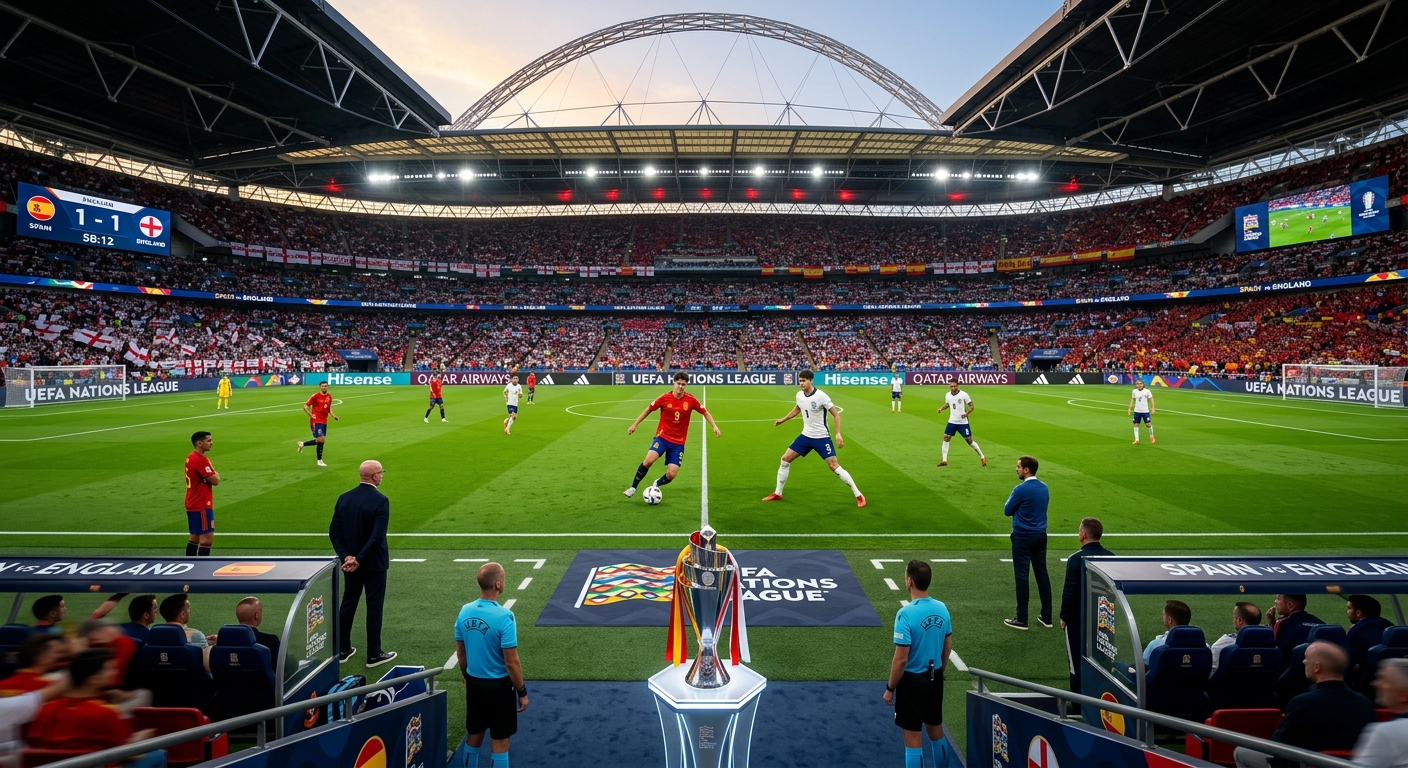
The Evolution of European Football: Understanding the UEFA Nations League
The UEFA Nations League has permanently transformed international football across Europe. Conceived as a modern solution to an age-old problem—meaningless international friendlies—the competition has quickly matured into a premier, high-stakes tournament.
History and Origins
For decades, international calendars were cluttered with non-competitive exhibition matches. National team managers struggled to evaluate players under pressure, while fans and clubs lamented the interruption of domestic league schedules for uninspiring games.
To address this, UEFA officially adopted the Nations League concept in 2014, debuting the inaugural tournament during the 2018–19 international season. The format introduced a tiered structure—Leagues A, B, C, and D—dividing nations into divisions based on their UEFA coefficient rankings.
The primary goals were simple yet effective:
- Competitive Balance: Ensure teams face opponents of similar skill levels.
- Meaningful Stakes: Implement promotion and relegation between divisions to reward performance and penalise underachievement.
- Tournament Access: Link Nations League performance to qualification pathways for major tournaments like the UEFA European Championship and FIFA World Cup.
Past Winners and Roll of Honour
Since its inception, four editions of the Nations League Finals have been contested, producing three distinct champion nations:
| Season | Host Nation | Champion | Runner-up | Final Score |
| 2018–19 | Portugal | Portugal | Netherlands | 1–0 |
| 2020–21 | Italy | France | Spain | 2–1 |
| 2022–23 | Netherlands | Spain | Croatia | 0–0 (a.e.t., 5–4 p) |
| 2024–25 | Germany | Portugal | Spain | 2–2 (a.e.t., 5–3 p) |
Highlights Across Editions:
- 2018–19: Host nation Portugal became the inaugural champions behind strong collective play, capped off by Gonçalo Guedes’ match-winning strike against the Netherlands in Porto.
- 2020–21: France claimed the trophy in Milan after coming from behind against Spain, courtesy of goals from Karim Benzema and Kylian Mbappé.
- 2022–23: Spain edged out Croatia in a tense penalty shootout in Rotterdam to secure their first Nations League crown.
- 2024–25: Portugal became the first two-time champion in competition history, defeating Spain on penalties in Munich following a thrilling 2–2 draw.
2026–27 Season Preview
The 2026–27 UEFA Nations League marks the fifth edition of the tournament, featuring 54 member associations competing across four divisions.
Key Structural Elements
- League A Expansion: As with the previous campaign, the top two teams from each of the four League A groups will advance to a two-legged quarter-final stage in March 2027. The four quarter-final winners then qualify for the Nations League Finals in June 2027.
- Relegation Battles: Group losers in League A drop automatically to League B, while third-placed teams compete in relegation play-offs against League B runners-up to preserve their top-flight status.
- Final Four-League Edition: This season will be the last under the four-league format (A through D) before UEFA transitions to a streamlined three-league system for 2028–29.
Group Phase Schedule
The 2026–27 league phase kicks off in late September 2026 with an extended international window and concludes in November 2026:
- Matchdays 1–4: September 24 – October 6, 2026
- Matchdays 5–6: November 2026
- Quarter-Finals & Play-Offs: March 25–30, 2027
- Nations League Finals: June 9–13, 2027
What to Watch For
Defending champions Portugal look to secure a third title, while powerhouse nations like Spain, France, and England headline a fiercely contested League A. Beyond the trophy itself, teams across all divisions will be eyeing performance-based entry routes into the qualifying play-offs for UEFA Euro 2028.